


Key Takeaways
- Protect people first, then take reasonable steps to prevent additional property damage.
- Photos, videos, receipts, estimates, and written communications can support a clearer claim.
- Temporary repairs may be necessary, but permanent repairs should usually wait until the damage is documented and inspected.
- Florida policies may treat wind, flood, water backup, and hurricane damage differently, so review the exact policy language.
- When a claim stalls or payment does not match the damage, organized records and focused questions can help move the dispute forward.
Property damage can turn an ordinary day into a stressful race against water, wind, mold, heat, and uncertainty. Whether a Florida home has been affected by a hurricane, roof leak, burst pipe, fire, fallen tree, or other unexpected event, the first decisions can affect safety, repairs, and the insurance claim. A property damage lawyer may be helpful when there is a serious disagreement about coverage, the cause of the loss, the amount owed, or a proposed settlement.
Still, many problems can be reduced through a calm, organized response. Start by preserving evidence, keeping records in writing, and separating urgent work from permanent reconstruction. This guide provides practical information for Florida property owners, but every policy and dispute is different.
The First Hours After Property Damage
Start With Safety
Do not enter or remain in an area with a risk of collapse, fire, exposed electrical wiring, gas leaks, contaminated floodwater, or unstable trees. Call emergency services when necessary. If it is safe, shut off water, electricity, or gas using the appropriate controls. Keep children, pets, and visitors away from the damaged area.
Create A Simple Timeline
Write down when the event happened, when you discovered the damage, who you contacted, and what steps you followed. Include the date and time of emergency mitigation, claim reporting, inspections, and contractor visits. A short timeline can prevent confusion later about when the damage appeared and how conditions changed.
Documenting The Damage
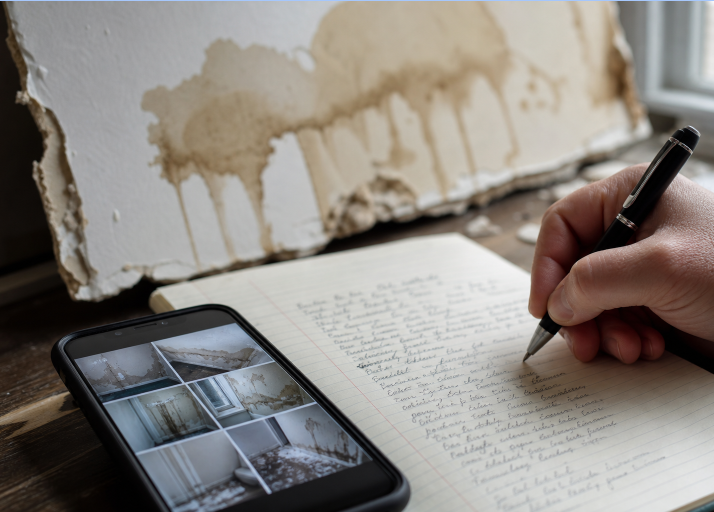
Take Photos And Video Before Moving Items
Capture wide views of every affected room, exterior elevation, roof area, and damaged item. Then take closer images of stains, broken materials, cracked surfaces, standing water, damaged furniture, appliances, and personal property. Use a ruler or a familiar object to show the extent of the damage when possible, and save the original files in more than one location.
Record Conditions A Camera Cannot Capture
Make factual notes about odors, water intrusion, loss of power, humidity, visible mold, unusual sounds, unsafe temperatures, or areas that cannot be used. Avoid guessing about the cause. Instead of writing that a roof failure caused all interior damage, describe what you observed, such as wet drywall beneath a visible roof opening.
Temporary Repairs And Cleanup
Stop Additional Damage Without Erasing Evidence
Reasonable emergency measures can include placing a tarp over an opening, boarding a broken window, extracting standing water, using fans or dehumidifiers, and moving unaffected belongings to a dry location. Photograph the conditions before and after the temporary work. Keep damaged materials if they can be safely stored, since they may help show the extent of the loss.
Save every receipt for emergency labor, tarps, drying equipment, storage, lodging, materials, and mitigation services. The records used to settle a homeowner’s insurance claim should include an accurate account of losses and expenses, not just the final repair bill.
Reviewing Your Insurance Policy
Read the declarations page and the relevant policy sections before accepting a payment or authorizing extensive work. Focus on covered causes of loss, exclusions, deductibles, limits, loss-of-use coverage, claim duties, and the way the policy values damaged property. Replacement cost and actual cash value can produce very different payment amounts.
Florida owners should pay special attention to the policy’s treatment of windstorm and hurricane deductibles, flood losses, water backup, and roof damage. Flood insurance is often separate from homeowners’ insurance. The Florida Department of Financial Services explains that its residential property mediation program may be available for qualifying disputes involving the cause of damage or an unsatisfactory settlement offer.
Building A Strong Claim File
Create a digital folder and, if practical, a paper folder for all claim materials. Keep the policy, claim number, photos, videos, repair estimates, invoices, inspection reports, receipts, proof of ownership, and messages with the insurer or contractors. Make a separate inventory of damaged belongings that lists each item, its approximate age, condition, purchase price (if known), replacement cost, and supporting photos or receipts.
After each phone call, send a brief written follow-up that includes the date, participants, key points, requested documents, and the next expected action. Ask direct questions: What damage is accepted? What is disputed? What additional information is needed? Which policy provision supports the insurer’s position? Written follow-up creates a useful record while keeping the discussion professional.
Comparing Repair Estimates
Two repair estimates may differ for legitimate reasons. One contractor may include demolition, disposal, permits, drying, code-related work, supervision, and hidden damage, while another may only price visible repairs. Ask for itemized estimates and written explanations of significant differences.
Review whether each estimate includes:
- Demolition, debris removal, and disposal
- Labor, materials, permits, and inspections
- Roofing, drywall, flooring, painting, and trim work
- Drying, testing, mold-related precautions, or environmental work when appropriate
- Code upgrades, project management, and repairs to connected areas
Resolving A Property Damage Dispute
Identify The Exact Disagreement
Do not treat the entire claim as one unresolved problem. Identify whether the disagreement concerns coverage, the cause of loss, the scope of repairs, pricing, depreciation, a deductible, or a missing category of damage. Compare the written claim decision with the policy, photographs, reports, and estimates. An independent contractor, engineer, appraiser, or other qualified professional may help clarify the issue when supported by a written report.
Mediation, Arbitration, And Court Action
Mediation uses a neutral person to help the parties discuss a voluntary resolution. Arbitration is more formal and may result in a binding or non-binding decision, depending on the policy or agreement. Review any appraisal, mediation, or arbitration clause carefully before agreeing to a process.
Court action may become necessary when negotiations fail, important evidence could be lost, urgent relief is needed, or the parties cannot reach a fair resolution. Before filing, organize the claim file, identify responsible parties, confirm deadlines, review required pre-suit procedures, and understand precisely what outcome is being requested.
Final Checklist
- Protect people and prevent further damage when safe. to do so
- Photograph and video-record conditions before the major cleanup.
- Report the claim promptly and keep the claim number available.
- Save receipts, damaged items, estimates, and written communications.
- Review the policy before accepting payment or signing a release.
- Request clarification in writing when the claim decision is incomplete or unclear.
- Act promptly if a dispute remains unresolved, since policy and legal deadlines may apply.
A well-organized response cannot eliminate every disagreement, but it can make the damage, repair needs, and claim history easier to understand. That clarity gives Florida property owners a stronger foundation for repair, payment, and a fair resolution.