


Key Takeaways
- Match caster capacity to the equipment’s maximum realistic working load.
- Consider flooring, obstacles, ramps, thresholds, travel distance, and operating conditions.
- Choose wheel materials based on traction, noise, durability, floor protection, and environmental exposure.
- Select swivel, rigid, dual-wheel, leveling, or spring-loaded casters based on movement and stability needs.
- Confirm mounting dimensions, brake requirements, wheel height, and available clearance before ordering.
- Inspect casters regularly for damage, wobble, debris, worn treads, and brake problems.
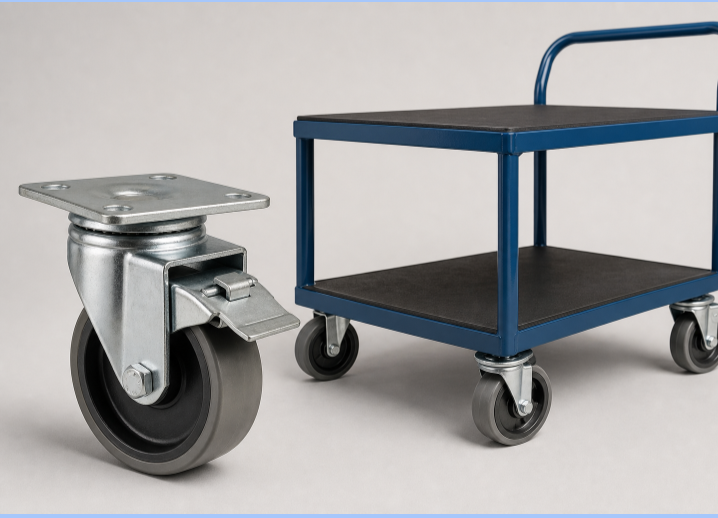
Choosing caster wheels is a practical equipment decision that affects how safely, quietly, and easily a cart or rack moves. The right heavy duty swivel caster depends on more than its appearance or price. Load weight, floor conditions, travel distance, mounting space, and the way people use the equipment all matter. A poor caster match can make a loaded cart difficult to steer, increase vibration, leave marks on finished flooring, or create instability at door thresholds and ramps. Start with the job the equipment must perform, then select a wheel-and-caster configuration that reliably supports that work.
Why Caster Selection Matters
Casters influence the movement and control of everything from tool carts to storage racks. Wheels that roll smoothly along the actual travel route can reduce unnecessary pushing and pulling. This matters in busy facilities, where well-maintained floors and clear aisles help reduce force, vibration, and material-handling hazards. The best choice is usually the one that fits the complete application. Consider how often the equipment moves, who moves it, where it travels, and whether it must remain stable when parked.
Start With the Total Load
Calculate the maximum working weight, not just the cart’s empty weight. Include the frame, shelves, tools, batteries, packaging, products, and accessories. Use the heaviest realistic load the equipment will carry.
Do not assume every caster carries an equal share of the weight at all times. Uneven floors, turns, thresholds, and shifting cargo can place more weight on some wheels than on others. Select casters with an appropriate capacity margin and review the manufacturer’s rating conditions.
A Simple Load Planning Process
- Record the empty weight of the equipment.
- Add the maximum expected cargo weight.
- Account for bumps, thresholds, ramps, and other shock loads.
- Choose casters rated for the application with a practical safety margin.
- Verify that the cart frame and mounting hardware can handle the same load.
Check the Floor and Travel Route
Inspect the entire route, not only the area where the cart begins. Smooth concrete, epoxy, tile, carpet, pavement, metal grating, ramps, cracks, door tracks, and elevator thresholds can all change how a caster performs.
Larger wheel diameters generally roll over small obstacles more easily than smaller wheels. Outdoor or mixed-use routes may call for greater ground clearance and more cushioning than a cart used only on clean indoor flooring.
Compare Common Wheel Materials
- Polyurethane: Often chosen for a balance of floor protection, relatively quiet rolling, and load support.
- Rubber: Can provide cushioning, traction, and lower noise on many surfaces.
- Nylon: A hard wheel material often considered for smooth floors, moisture exposure, and higher-load applications.
- Phenolic: May suit selected industrial uses where heat resistance and load capacity are important.
- Steel or cast iron: Can support demanding loads, but may create more noise and be less suitable for finished floors.
- Pneumatic or no-flat wheels: Often useful on rough surfaces where shock absorption and clearance matter.
Material names alone do not guarantee performance. Check the wheel manufacturer’s information for temperature limits, chemical compatibility, load ratings, and floor recommendations.
Choose a Caster Style
Swivel casters rotate to help equipment turn in tight spaces. Rigid casters point in one direction and support straight-line tracking. A mixed layout can provide both maneuverability and control when the cart design supports it.
- Swivel casters: Best for flexible movement and tight turns, though they may take more effort to keep moving straight.
- Rigid casters: Useful for longer, straighter routes, but they limit turning flexibility.
- Dual-wheel casters: Can spread load across two wheels and may improve stability, provided the wider design fits the equipment.
- Leveling casters: Helpful when equipment must roll into place and then stand firmly during use.
- Spring-loaded casters: May help manage vibration or uneven surfaces when spring travel and load limits match the application.
Also, confirm whether a plate mount or stem mount matches the existing frame. Mounting style is just as important as wheel material.
Use Brakes and Locks Properly
A wheel brake stops the wheel from rolling. A swivel or directional lock limits the caster’s turning action. A total lock generally restricts both wheel rotation and swivel movement. A mobile worktable may need a total lock, while a cart that must travel down a long aisle may benefit from directional control. Place brakes where operators can reach them without awkward footing or exposure to pinch points. Brakes improve control, but they do not correct unstable loading, weak mounting hardware, or unsafe operating practices.
Consider Ergonomics
Wheel diameter, tread, bearings, caster alignment, load balance, handles, and available turning space all affect the force needed to move equipment. A supply cart on smooth indoor flooring may work well with a quiet, floor-friendly tread. A production cart crossing cracked concrete may need larger, more resilient wheels. Review repeated pushing and pulling tasks, particularly when workers make frequent turns or move fully loaded equipment. Better casters can help, but route maintenance, clear visibility, proper handles, and realistic load limits remain important.
Plan for Special Conditions
Heat, water, cleaning chemicals, oils, solvents, salt, and outdoor exposure can change wheel and frame performance. Wet or washdown areas may require corrosion-resistant components. High-temperature areas need wheels designed for the actual operating temperature. Electronics-related environments may also require anti-static or ESD-rated components. For a broader background on wheel designs and mounting arrangements, the overview of caster construction and uses can help clarify basic terminology before comparing products.
Confirm Mounting and Fit
Measure wheel diameter, wheel width, overall height, axle size, plate dimensions, bolt-hole spacing, and stem type before ordering replacements. A taller caster can raise work surfaces or reduce clearance beneath shelves and equipment. Inspect the frame and hardware before installation. When wear has created different wheel heights or tread conditions, replacing a matching set can help preserve balance and predictable movement.
Inspect and Maintain Casters
Set a routine to check for flat spots, cracks, cuts, tread separation, loose bolts, bent forks, swivel wobble, and damaged brake parts. Remove string, shrink wrap, hair, wire, and other debris from axles and swivel sections. Grinding, scraping, clicking, or a sudden increase in push force are signs that the equipment needs attention.
Common Questions About Caster Wheels
How many casters does a cart need?
Four-caster layouts are common, but the proper configuration depends on frame design, load balance, stability requirements, and turning needs.
Are larger caster wheels always better?
Not always. Larger wheels can improve obstacle crossing, but they also require sufficient clearance, mounting space, and acceptable equipment height.
When should a caster be replaced?
Replace a caster when it has visible damage, excessive wobble, poor brake engagement, grinding movement, damaged mounting hardware, or unusually high rolling resistance.
Conclusion
The right caster wheel matches the load, route, floor, environment, mounting system, and operator’s needs rather than relying on a one-size-fits-all choice. Start by measuring the equipment and determining the total load each caster must safely support, then consider wheel diameter, material, tread, swivel or rigid configuration, and braking requirements. Flooring conditions also matter, since smooth indoor surfaces may require different characteristics than rough, uneven, wet, or debris-prone environments. Before putting a new caster into regular service, test the equipment under a realistic load and along the routes where it will actually be used. Operators should also watch for unusual vibration, resistance, noise, or instability that could indicate a problem. Regular inspections, cleaning, lubrication where appropriate, and timely replacement of worn components can help keep mobile equipment dependable, easier to maneuver, and better suited to daily operations.