


Key Takeaways
- Put safety and medical care ahead of insurance calls, paperwork, or fault discussions.
- Save evidence early, including trip details, photos, witness contacts, and medical records.
- Insurance coverage may depend on the Lyft driver’s status in the app when the collision occurred.
- Report the crash through Lyft and, when appropriate, to law enforcement.
- Do not assume an early settlement offer accounts for every medical, financial, and personal consequence of the crash.
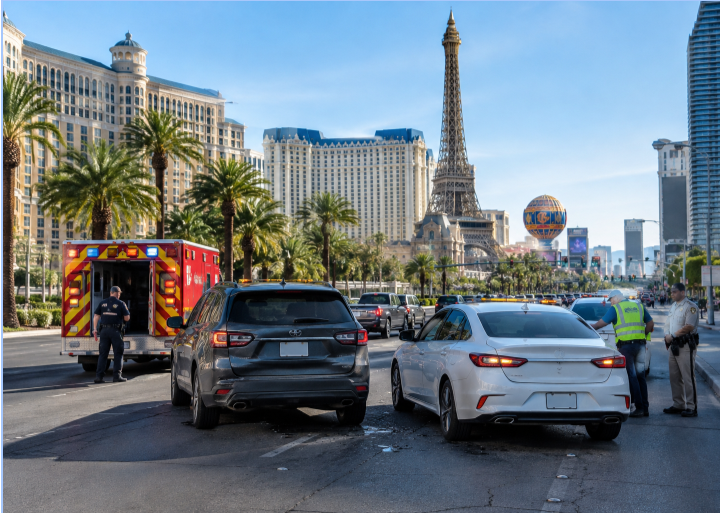
A Lyft crash can turn a routine ride down the Strip, to Harry Reid International Airport, or home from Downtown Las Vegas into a stressful situation involving injuries, multiple drivers, and several insurance companies. Passengers looking for legal help after a Lyft accident in Las Vegas should begin by protecting their health and preserving a clear record of what happened.
Every collision has different facts. The steps below can help a passenger respond carefully after a crash in Las Vegas, whether the Lyft driver, another motorist, or an unknown factor may have contributed to the incident.
Why Lyft Crashes Can Be Different
Rideshare claims can be more complicated than a typical two-car collision. A passenger may need to deal with the Lyft driver’s insurer, another driver’s insurer, Lyft-related coverage, medical providers, and law enforcement records. The driver’s app status can also matter.
Passengers generally do not need to determine coverage at the crash scene. Their immediate role is to document what they can, obtain care, and make timely reports. Insurers can review policies, trip records, and the circumstances of the collision later.
Step One: Move to a Safe Location
If the vehicle can be moved safely, get out of active traffic and away from secondary hazards. Busy Las Vegas corridors, hotel driveways, construction areas, and late-night pickup zones can create additional risks after an impact. Use hazard lights when available, remain visible after dark, and call 911 when anyone is injured, traffic is blocked, or there is immediate danger.
Do not move someone who may have a serious head, neck, back, or spinal injury unless staying in place presents an immediate threat. Wait for trained emergency responders whenever possible.
Step Two: Check for Injuries
Some injuries are obvious, while others develop gradually. Headache, dizziness, confusion, neck pain, numbness, abdominal pain, stiffness, or unusual fatigue can all warrant medical attention. A person may feel shaken but functional immediately after a crash, only to notice symptoms later that day or in the following days.
Seek an appropriate medical evaluation and follow the care instructions provided. Keep discharge papers, prescriptions, appointment summaries, medical bills, and notes about symptoms. These records can help establish both the timing of an injury and the treatment received.
Step Three: Report the Crash
An official crash report can provide a useful starting record, even though it may not resolve every fault or insurance question. Report the incident through the Lyft app or support process as soon as practical. Save the trip receipt, driver name, vehicle description, pickup and drop-off details, route information, and any case or incident number provided.
While events are fresh, write down the date, time, location, weather, traffic conditions, and a simple sequence of what occurred. Avoid guessing about speed, fault, or facts you did not personally observe.
Step Four: Gather Useful Evidence
Small details can matter later, but evidence collection should never create another safety risk. When it is safe, consider preserving the following:
- Photos of vehicle damage, the roadway, traffic signals, debris, and visible injuries.
- Names and contact details for witnesses.
- Relevant dashcam footage, phone videos, messages, and location history.
- Damaged personal items, such as clothing, luggage, helmets, or child safety seats.
- Receipts for transportation, prescriptions, medical visits, and other crash-related expenses.
How Insurance Coverage May Work
Insurance coverage should be evaluated according to the specific facts and available policies. In broad terms, these situations may arise:
- The driver was not using the Lyft app: The driver’s own auto insurance may be the primary source of coverage.
- The driver was available for ride requests: Coverage may come from the driver’s personal insurance or an additional rideshare policy.
- The driver was on an assigned trip or had a passenger in the vehicle: The circumstances of the crash will determine whether the rideshare company’s insurance applies.
- Another motorist caused the collision: The responsible driver may be liable for the resulting damages, and their insurance may cover the losses.
Las Vegas Crash Risk and Rideshare Safety
Las Vegas roads carry a mix of local commuters, visitors, pedestrians, motorcycles, taxis, buses, and rideshare vehicles. The city reports that from 2018 through 2022, Las Vegas experienced 53,596 transportation crashes, including 251 fatalities and 750 serious injuries. Its Vision Zero safety data underscores why seat belts, careful driving, and extra attention around high-traffic pedestrian areas matter.
Passenger safety concerns can also extend beyond vehicle damage. A 2026 Government Accountability Office review found that available data does not provide a complete picture of rideshare and taxi assaults against drivers and passengers from 2021 through 2025. The agency’s review of rideshare safety data and safety features highlights the value of using in-app safety tools and promptly reporting concerning conduct.
Common Mistakes to Avoid After a Crash
- Leaving without obtaining available contact, trip, or insurance information.
- Posting opinions about blame, injuries, or settlement discussions on social media.
- Giving a recorded statement before reviewing the facts and your medical condition.
- Accepting a quick payment before understanding the full scope of treatment or missed work.
- Ignoring recommended follow-up care or failing to save related records.
How to Build a Simple Crash File
Create one secure folder for photos, videos, medical records, receipts, messages, claim numbers, and correspondence. Add a timeline describing what happened before, during, and after the collision. Keep a short symptom journal, record missed work or transportation costs, and save every communication from Lyft or an insurer.
Questions Passengers Often Have
What should a passenger do first after a Lyft crash?
Get to safety, call for emergency help when needed, seek medical attention, and preserve basic trip and crash information.
Can injuries matter even when vehicle damage looks minor?
Yes. Vehicle damage does not always show the full physical effect of an impact. Medical evaluation and documented symptoms are more useful than assumptions based solely on the vehicles’ appearance.
What should a passenger save from the Lyft app?
Save the trip receipt, driver and vehicle details, route, pickup and drop-off locations, messages, and any incident or support reference number.
Final Checklist
- Get to a safe place.
- Call emergency services when needed.
- Seek medical care and follow up on symptoms.
- Report the crash through the appropriate channels.
- Save trip details, photos, witness information, and records of expenses.
- Communicate carefully and avoid rushing into a settlement.
Conclusion
A Lyft accident claim in Las Vegas may involve confusing questions about evidence, insurance, injuries, and responsibility. A calm response can make a meaningful difference. Prioritize safety, seek medical care, report the crash, and keep organized records so the facts remain available when needed.