


Key Takeaways
- Civic trust grows through consistent action, clear communication, and follow-through.
- Local participation gives residents practical ways to address shared concerns.
- Communities can disagree while still cooperating on goals such as safety, access, and accountability.
- Reliable information helps people make decisions and avoid spreading harmful rumors.
- Small, repeated habits can strengthen relationships long before a crisis occurs.
Civic trust is the confidence that people, institutions, and neighbors will act responsibly enough to solve shared problems. It does not require blind agreement or perfect leadership. It grows when residents can see that concerns are heard, information is available, and commitments lead to visible action.
Participation can also mean protecting rights and holding power accountable. People who are concerned about civil rights, voting access, or democratic institutions can learn how you can fight back against Trump while also building stronger relationships and problem-solving habits in their own communities.
Why Civic Trust Matters
Trust affects whether people vote, volunteer, attend public meetings, contact local offices, and support shared institutions such as schools, libraries, and public health services. When people believe participation is pointless, they are less likely to share local knowledge or work with others. When they see clear processes and honest responses, participation becomes more worthwhile.
Trust is usually built through repeated experiences, not one major event. A neighborhood association that publishes meeting notes, a school that responds to family questions, or a city office that explains a delayed project can all demonstrate reliability in small but meaningful ways.
Residents who are unsure where to begin can use the contact information for state and local government services to identify the public offices, elected officials, election offices, and agencies connected to an issue. Knowing who is responsible is an important first step toward useful civic participation.
What Makes a Community Resilient?
Community resilience is the ability to work together during stress, change, conflict, or emergency. It includes preparation for disasters, but it is broader than emergency supplies and physical infrastructure. Resilient communities also rely on relationships, trusted communication, fair decision-making, and practical knowledge about where to find help.
- Connection: People know neighbors, organizations, and services they can turn to.
- Participation: Residents have real opportunities to shape decisions.
- Communication: Leaders share timely information in language people can understand.
- Cooperation: Different groups can work together even when they hold different views.
Start With Small, Visible Actions
Broad promises can feel distant. A specific local project gives people a reason to participate and a way to see progress. Choose an issue that affects daily life, such as safer crossings, library access, school transportation, housing information, public health outreach, or a neighborhood cleanup.
A Simple Three-Step Starting Point
- Choose one problem that affects people nearby.
- Speak with residents who experience the problem in different ways.
- Agree on one realistic action, then set a date to review what happened.
For example, residents, a library, and a tenant group might create a simple monthly bulletin that lists public meetings, service contacts, and deadlines. The project does not solve every problem, but it makes useful information easier to find and creates a reason for groups to cooperate.
Create Better Places for People to Meet
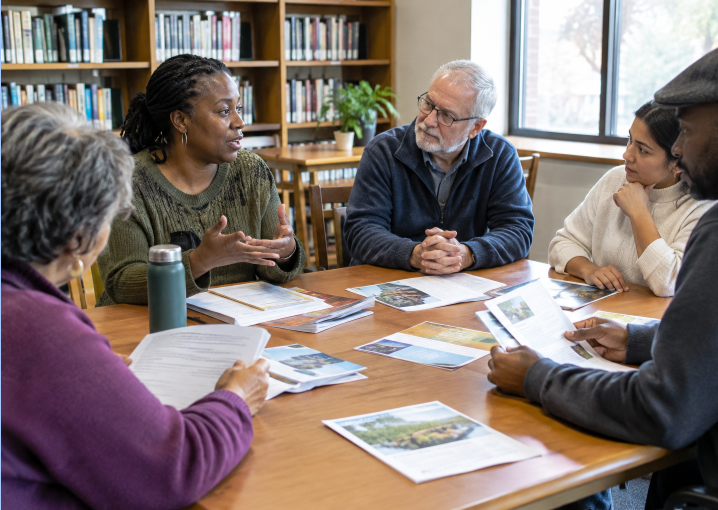
Regular contact helps turn unfamiliar people into neighbors who can work together. Libraries, schools, community centers, houses of worship, parks, and local businesses can all serve as practical gathering places when meetings are open, predictable, and welcoming.
- Publish an agenda before the meeting.
- Use plain language and explain unfamiliar terms.
- Offer more than one way to participate, including written comments when possible.
- Set clear time limits so participation feels manageable.
- Share notes, decisions, and next steps afterward.
Make Civic Participation Easier
Many people want to participate but face real barriers. Work schedules, childcare, transportation, language access, disability access, limited internet service, and uncertainty about government processes can all keep people away. Treating these barriers as practical design problems can make participation more representative.
Practical Ways to Lower Barriers
- Schedule events at different times, including evenings or weekends.
- Provide virtual and in-person participation options.
- Use translated materials when they are needed.
- Keep forms, agendas, and instructions short.
- Offer family-friendly formats or childcare when feasible.
- Explain who will make the decision and how public input will be used.
Build Trust Through Clear Information
Unclear, incomplete, or delayed information can create confusion and suspicion. Community groups and public leaders can communicate more responsibly by naming their sources, dating updates, and acknowledging what is still unknown.
A Reliable Information Checklist
- Name the source of important information.
- Separate verified facts from opinions or proposals.
- Include the date so readers know whether an update is current.
- Correct mistakes openly rather than quietly deleting them.
- Avoid dramatic claims that cannot be supported.
- Share updates through the channels residents actually use.
Before sharing a post or rumor, pause and check the original source. Compare reporting, look for official public information when relevant, and be cautious about claims that demand immediate outrage without evidence. Careful sharing protects both individuals and the broader community.
Practice Listening Across Differences
Civic trust does not require everyone to agree. It requires people to listen seriously, ask fair questions, and identify areas where cooperation is possible. Respectful dialogue should not hide real disagreements. Its purpose is to make disagreement more useful and less destructive.
- Ask what problem the other person is trying to solve.
- Restate their main point before responding.
- Challenge ideas without attacking the person.
- Admit when more information is needed.
- Look for at least one shared goal.
- End with a clear next step when possible.
Give Young People a Real Role
Young people are current members of their communities, not only future voters. Schools and community organizations can invite them into student advisory boards, service projects, neighborhood research, local reporting, and public forums. Adults should provide structure and support without taking over the work. These opportunities help young people practice research, public speaking, teamwork, and problem-solving.
Measure Progress Without Making It Complicated
Communities do not need complicated scorecards to see whether participation is improving. Simple measures can show whether people are returning, whether more voices are represented, and whether agreed actions are actually completed.
- Number of residents who attend, respond, or volunteer.
- Range of neighborhoods and groups represented.
- Time taken to answer public questions.
- Number of agreed actions completed by the stated deadline.
- Feedback gathered after meetings or projects.
- Whether participants return for later activities.
Common Questions About Civic Trust
Can one person make a difference?
Yes. One person can invite neighbors, share accurate information, attend a meeting, connect someone with a service, or ask a public question. Lasting progress often begins with repeated small efforts rather than a single dramatic action.
What if people do not trust local leaders?
Start with listening, evidence, realistic expectations, and regular progress updates. Trust cannot be demanded. It must be earned through consistent behavior and honest communication.
Does civic participation only mean voting?
Voting is important, but civic life also includes volunteering, attending meetings, helping neighbors, serving on boards, contacting representatives, and supporting reliable local information.
A 30-Day Plan for Stronger Civic Participation
- Week One: Choose one local issue and identify reliable information.
- Week Two: Speak with at least three people who see the issue differently.
- Week Three: Attend a meeting, contact a local office, or join a community group.
- Week Four: Take one shared action and record the result.
Final Thoughts
Civic trust is built through ordinary choices. It grows when people show up, share reliable information, listen with care, and follow through. Communities do not need perfect agreement to become stronger. They need accessible ways to participate, clear opportunities to work together, and a shared commitment to treating public trust as something earned each day.