


Table Of Contents
- Why Rural New Jersey Properties Need a Purpose-Built Fence
- How AMR Fence Company Plans a Safer Horse Fence
- Ranch and Horse Fence Options for Different Properties
- Building for Slopes, Wet Areas, and Uneven Ground
- Making Daily Farm Work More Efficient
- Why Gates Matter as Much as the Fence Line
- Fencing for Horses, Livestock, and Rural Properties
- What Affects the Cost of Ranch Fencing?
- Maintaining a Ranch or Horse Fence
- Request a Custom Ranch Fence Plan
Horse and livestock fencing has to do more than mark a property line. On a working farm, a fence must help contain animals, support daily chores, provide dependable access, and fit the ground from the first corner post to the last gate. AMR Fence Company designs and installs custom ranch and horse fencing for rural properties in Mount Olive, Long Valley, Hackettstown, and surrounding areas of Morris, Hunterdon, Somerset, and Warren County, New Jersey. The company serves both residential and commercial customers.
Whether a property has one paddock behind a barn or several pastures across uneven acreage, the right layout begins with the animals and the land. Horses can lean, rub, run toward a boundary, or test a weak section. Goats, sheep, alpacas, and cattle create different containment demands. A well-planned fence considers those behaviors alongside visibility, terrain, gate placement, drainage, and future expansion.
Why Rural New Jersey Properties Need a Purpose-Built Fence
A standard residential fence is not automatically suited to a pasture or livestock enclosure. Long fence runs, slopes, wooded edges, rocky soil, wet areas, and equipment access all affect how a ranch fence should be built. AMR Fence Company reviews the conditions on site so the material, layout, posts, bracing, and gates serve the way the property is actually used.
Safety is especially important around horses. Rutgers Cooperative Extension notes that fencing is one part of managing commercial equine operations, and its horse fencing safety guidance addresses effective fencing as part of sound farm planning. A fence should be visible, maintained, and arranged to reduce avoidable hazards around turnout areas, gates, and travel lanes.
How AMR Fence Company Plans a Safer Horse Fence
Every property starts with a practical review of the land and the owner’s goals. A custom plan can account for:
- Terrain and site conditions: Rolling grades, drainage paths, rock, low spots, wooded areas, and existing fence lines.
- Animal needs: Horses, cattle, goats, sheep, alpacas, or mixed livestock may require different heights, openings, and materials.
- Fence visibility: Rail, board, and combination designs can make the boundary easier for horses to recognize.
- Working areas: Perimeter fencing, paddocks, cross-fencing, exercise areas, and controlled travel lanes.
- Access: Gate locations for people, tractors, trailers, mowers, hay deliveries, and emergency entry.
- High-pressure points: Corners, end posts, water areas, shelter entrances, and gates where animals may gather or push against the fence.
Ranch and Horse Fence Options for Different Properties
There is no single best fence for every farm. AMR Fence Company helps property owners compare practical options based on animal type, terrain, desired appearance, maintenance expectations, and budget. The company also installs vinyl, aluminum, chain-link, wood, and split rail fencing that enhances property security, privacy, and curb appeal for both residential and commercial properties.
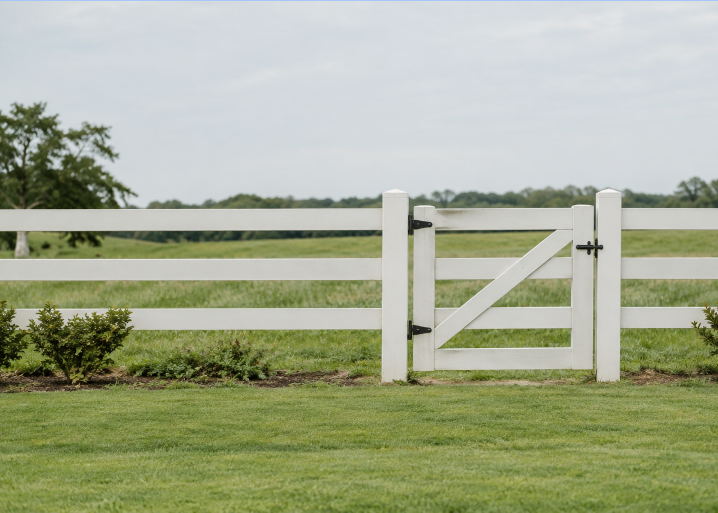
- Post-and-rail fencing: A familiar choice for horse farms, paddocks, and country properties where a visible boundary matters.
- Board fencing: A traditional finished look for front pastures, barns, estates, and driveway edges.
- Woven wire horse fencing: Useful where smaller openings and added containment are important, especially when paired with appropriate posts and support.
- Combination fencing: Rail and wire systems can combine the appearance of a rail fence with more complete containment.
- Split rail fencing: A natural-looking option for selected rural boundaries and landscape-focused areas, depending on the containment needs of the animals.
University of Georgia guidance on horse-fence visibility research explains that visible, durable, horse-safe fencing is important because horses have a natural flight response. The guidance identifies a 5-foot minimum for perimeter pasture fences as a general recommendation, while the appropriate final design should still reflect the individual horses, the property, and the purpose of the enclosure.
Building for Slopes, Wet Areas, and Uneven Ground
Field-built ranch fencing is especially useful on uneven New Jersey properties. Rather than forcing rigid prefabricated panels onto a changing grade, posts can be installed along the actual fence line so the fence follows rolling terrain. This approach helps address transitions, clearance beneath the fence, drainage routes, and changes in elevation.
Corners, ends, and gate openings deserve added attention because they carry more load than a straight run. AMR Fence Company plans appropriate support and bracing for these areas, particularly where animals lean, gates see frequent use, or terrain adds stress to the fence line. An on-site estimate is valuable when a property includes hills, wet soil, rock, irregular boundaries, or an older fence that may need removal.
Making Daily Farm Work More Efficient
A ranch fence should support the work that happens around it. Thoughtful layout planning can make routine movement safer and easier for both animals and people.
- Create separate paddocks to help manage turnout and rotational use.
- Plan lanes between barns, pastures, shelters, and exercise areas.
- Place walk gates where feed, water buckets, tools, and routine checks are most convenient.
- Use equipment gates sized for tractors, trailers, mowers, and hay deliveries.
- Maintain practical access to water, shelter, and other essential areas.
- Allow room to add a future paddock, cross-fence, or new gate when needs change.
Why Gates Matter as Much as the Fence Line
Gates are central to a working property plan. A gate that is too narrow, poorly placed, or inadequately supported can create daily frustration. AMR Fence Company can coordinate farm gates, pasture gates, walk gates, driveway gates, and equipment access as part of one connected layout. Gate width should reflect the largest vehicle or equipment that needs to pass through, while gate posts and hardware should be selected for frequent opening, closing, and weight-bearing use.
Fencing for Horses, Livestock, and Rural Properties
Ranch fencing can serve horse farms, boarding facilities, hobby farms, small livestock operations, country estates, riding areas, and property lines near open fields. Different animals interact with fences differently. Goats may climb or squeeze through openings, sheep may benefit from tighter lower sections, and cattle can apply steady pressure along a long run. Matching the design to the animals is more dependable than applying one material or layout everywhere.
Some rural properties also need deer fencing around gardens, orchards, hay fields, or planted areas. Planning livestock and deer fencing together can help coordinate corners, gate locations, and transitions so separate fence systems do not interfere with each other.
What Affects the Cost of Ranch Fencing?
Ranch and horse fence pricing depends on the property and the finished design. Important cost factors include:
- Total fence length and the number of enclosed areas.
- Fence material, style, and height.
- The number, width, and hardware requirements of gates.
- Slopes, rock, wet ground, drainage concerns, and other terrain conditions.
- Corner, end, and gate bracing requirements.
- Removal and disposal of existing fencing.
AMR Fence Company evaluates these details during the estimate process rather than applying one generic price to every rural property.
Maintaining a Ranch or Horse Fence
Regular inspections help identify small issues before they become escape routes or larger repair needs. Walk the fence line after severe weather and at the start of each season. Look for broken rails, loose posts, sagging wire, leaning gates, damaged latches, branches, and debris. Pay particular attention near water, feed, shelter, corners, and gates, where animals may place more pressure on the fence. AMR Fence Company also provides repair services for damaged sections, broken rails, loose posts, and other fencing concerns.
Request a Custom Ranch Fence Plan
A useful AMR Fence Company request includes the property location, approximate fence length, animal types, preferred fence style, number of paddocks, gate needs, terrain concerns, and the condition of any existing fence. With that information, the project can be planned as a working-property system that supports safety, containment, daily access, curb appeal, and the next stage of the property’s use.