


Table of Contents
- Why Window Treatments Matter
- Start With Each Room’s Needs
- Compare Window Treatment Types
- Sunlight, Energy Efficiency, and Privacy
- Safety and Smart Controls
- Measuring and Installation
- Common Questions
In Flower Mound-Keller, TX, window treatments need to do more than complete a room’s design. They can soften the intense North Texas sunshine, reduce screen glare, improve privacy in growing neighborhoods, and make living spaces feel more comfortable year-round. Homeowners considering window blinds and installation Flower Mound-Keller, TX, can get better results by choosing each treatment based on the needs of the room, not simply by selecting one look for the entire house.
Large windows, open-concept layouts, and rooms facing the morning or afternoon sun each present distinct challenges. A treatment that works beautifully in a shaded dining room may not provide enough light control for a west-facing bedroom, a home office, or a media room.
Why Window Treatments Matter
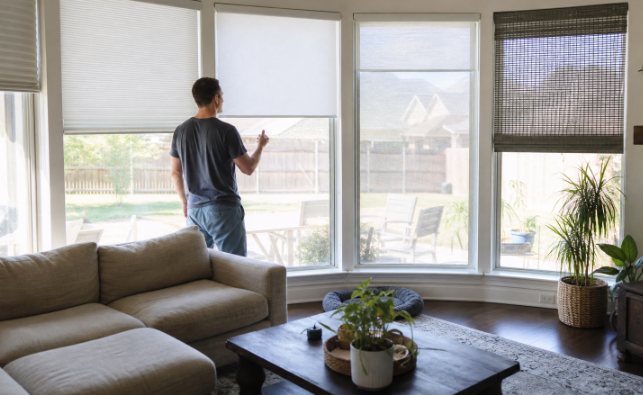
Blinds, shades, shutters, and drapery influence how a room handles daylight, heat, visibility, and daily comfort. In the Flower Mound-Keller area, bright sun can make a television difficult to watch or turn a computer screen into a mirror. Treatments also give residents more control over rooms facing streets, nearby homes, patios, and backyards.
For existing window blinds with broken slats, worn cords, or unreliable lift systems, searching for window blind repairs near me can be a practical first step before deciding whether repair or replacement is the better fit. A sound frame and fabric may justify repair, while poor fit, repeated failures, fading, or outdated cord systems often point toward replacement.
Start With Each Room’s Needs
Before comparing colors or materials, identify the main issue each window needs to solve. This short planning process helps avoid paying for features that do not match the space.
- Identify the strongest concern, such as glare, direct heat, drafts, privacy, or room-darkening.
- Consider how the room is used from morning through evening.
- Note the window direction, size, and whether furniture blocks access.
- Choose the needed level of light filtering, adjustable light, or blackout coverage.
- Set a budget that includes hardware, controls, and professional installation if needed.
Suggested Room Matches
- Bedrooms: Prioritize privacy, quiet operation, and room-darkening fabrics or layered treatments.
- Living rooms: Balance daylight, views, glare control, and a finish that suits the decor.
- Home offices: Use solar shades or adjustable blinds to reduce monitor glare without making the room feel closed in.
- Kitchens and bathrooms: Favor moisture-resistant, easy-clean materials such as faux wood or select roller shades.
- Media rooms: Choose room-darkening options with minimal side gaps for a better viewing experience.
Compare Window Treatment Types
There is no universal best choice. The right product depends on the window and the household routine.
- Roller shades: A clean, compact option available in light-filtering, solar, and room-darkening materials.
- Solar shades: Useful for taming harsh daylight and screen glare while preserving portions of the outdoor view.
- Cellular shades: Honeycomb pockets create an extra layer near the glass, making them worth considering for comfort goals.
- Wood and faux wood blinds: Provide familiar styling and adjustable slats for changing light conditions.
- Roman shades and drapery: Add fabric softness, work well with layered designs, and can help cover wide windows.
- Shutters: Offer a structured appearance with durable, adjustable light and privacy control.
Sunlight, Energy Efficiency, and Privacy
East-facing windows often benefit from morning glare control, while west-facing windows can receive intense afternoon brightness and heat. Solar fabrics help diffuse light, adjustable slats allow changing control through the day, and room-darkening shades work best when sleep or movie viewing is the priority. For windows that need both soft daytime light and reliable privacy, layering a shade with side panels or drapery can be especially effective.
Window treatments are only one part of an energy plan. They do not replace air sealing, insulation, HVAC maintenance, or efficient glazing. Still, closing treatments during the hottest portion of a sunny day can reduce direct solar heat, while opening them during mild daylight hours may reduce reliance on electric lighting. Window glazing, frames, and orientation affect heat transfer, which is why two windows in the same house may need different strategies.
Privacy also changes by time of day. A light-filtering shade may limit views into a room during daylight, but indoor lights can reveal silhouettes after dark. Bedrooms, bathrooms, and street-facing spaces often benefit from a room-darkening or opaque layer. Top-down/bottom-up shades can be helpful where homeowners want daylight through the upper glass while keeping the lower portions covered.
Safety and Smart Controls
Safety should be a standard selection factor in homes with children or pets. The Consumer Product Safety Commission recommends that households choose cordless window coverings when young children are present. Keep beds, cribs, play furniture, and toys away from cords, secure continuous-loop controls as directed, and inspect older products for loose or damaged components.
Motorized shades can also support safer, easier operation by eliminating many cords that are reachable. They are particularly useful on tall stairwell windows, wide glass doors, and hard-to-reach areas. Scheduled controls can close shades before the hot afternoon sun reaches a room and automatically provide evening privacy. Compare battery-powered, plug-in, and hardwired options, and ensure manual controls remain available if power or a smart-home connection fails.
Measuring and Installation
Accurate measurements protect the look and performance of a new treatment. Measure width at the top, middle, and bottom, then measure height in more than one location. Check inside-mount depth and note locks, handles, cranks, trim, and other obstructions. An outside mount may reduce light gaps and improve coverage, while an inside mount can create a streamlined appearance when the opening is square and deep enough.
Small errors can cause uneven gaps, reduced privacy, difficult operation, or an expensive reorder. Skylights, sliding doors, curved windows, extra-wide openings, and windows with unusual trim deserve specialized planning before ordering.
Common Questions
Which treatment is best for energy savings?
It depends on the window orientation, glass type, room use, and season. Cellular shades, solar-control fabrics, and layered treatments can each address different comfort concerns. Product performance information is more useful than broad claims about any one style.
Should every room use the same window treatment?
Not necessarily. Coordinating colors or materials can create a cohesive home, but bedrooms may need blackout control, while living spaces benefit from filtered daylight and an open view.
Do light-filtering shades provide nighttime privacy?
Not always. They can allow shadows or silhouettes to show when interior lights are on. Add an opaque shade, blind, shutter, or drapery layer where stronger nighttime privacy matters.
Final Takeaway
The best window treatments for Flower Mound-Keller, TX homes begin with function. Consider the direction of sunlight, privacy, heat, safety, maintenance, and how each room is used. A room-by-room plan makes it easier to select treatments that look intentional while delivering more comfortable everyday living.